Advertorial

The $1,487 Vet Bill I Never Saw Coming (And What Your Cat's Plastic Obsession Is Really Trying to Tell You)
"But... she's only two years old. How is that possible?"
I'll never forget the sound.
Crinkle. Crinkle. Chew.
It was 3:17 AM, and Luna was at it again—this time attacking the plastic bag I'd forgotten to hide after bringing home groceries. I dragged myself out of bed, pulled the bag away from her, and shoved it in a drawer. For the hundredth time that month.
"Why does she do this?" I muttered, crawling back under the covers.
I thought it was just a weird quirk. Something annoying. Like she was doing it on purpose just to mess with me.
But eleven months later, during what I thought would be a routine vet checkup, I discovered something shocking.
And it broke my heart.
It Started as "Just a Quirky Habit"
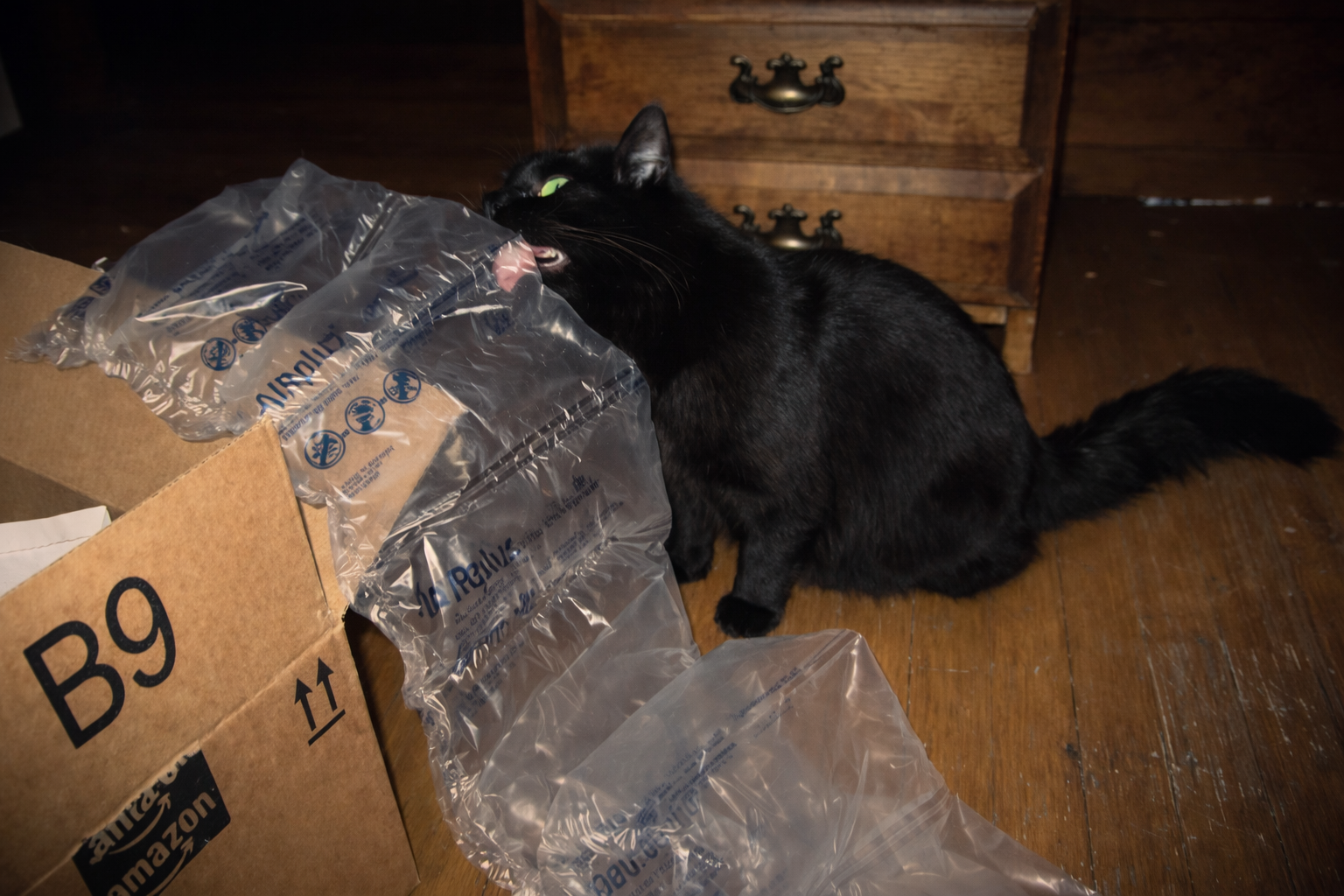
At first, Luna's plastic obsession seemed random. Grocery bags. Bread bags. Even the crinkly packaging from deliveries. If it crinkled, she wanted to chew it.
I thought it was just... her thing. You know, like how some cats are obsessed with hair ties or boxes. Harmless. Quirky.
But then the destruction started spreading.
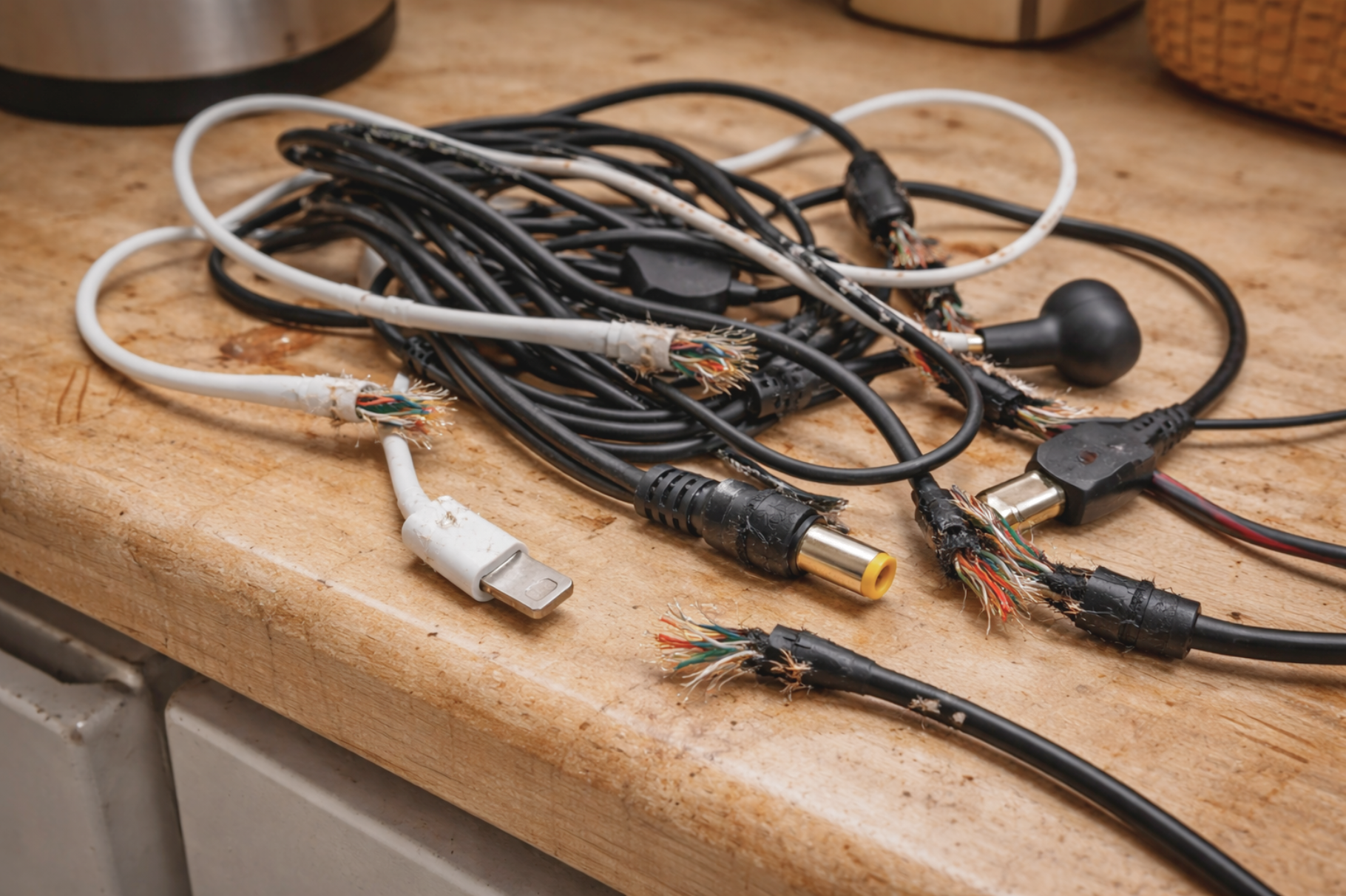
My phone charger. $30 to replace.
My boyfriend's Xbox headset cord. $40.
Two pairs of headphones. Another $80.
I started hiding things. Wrapping cords. Buying cord covers (which she chewed through). Bitter apple spray—she licked it off like it was a treat(it left me coughing and with sinus irritation for days).
I bought toys. So many toys. Hoping something would redirect her chewing.
Nothing worked.
And all this time I thought it was just an annoying behavior problem, until my vet helped me understand what my cat was actually trying to tell me.
The Vet Visit That Changed Everything
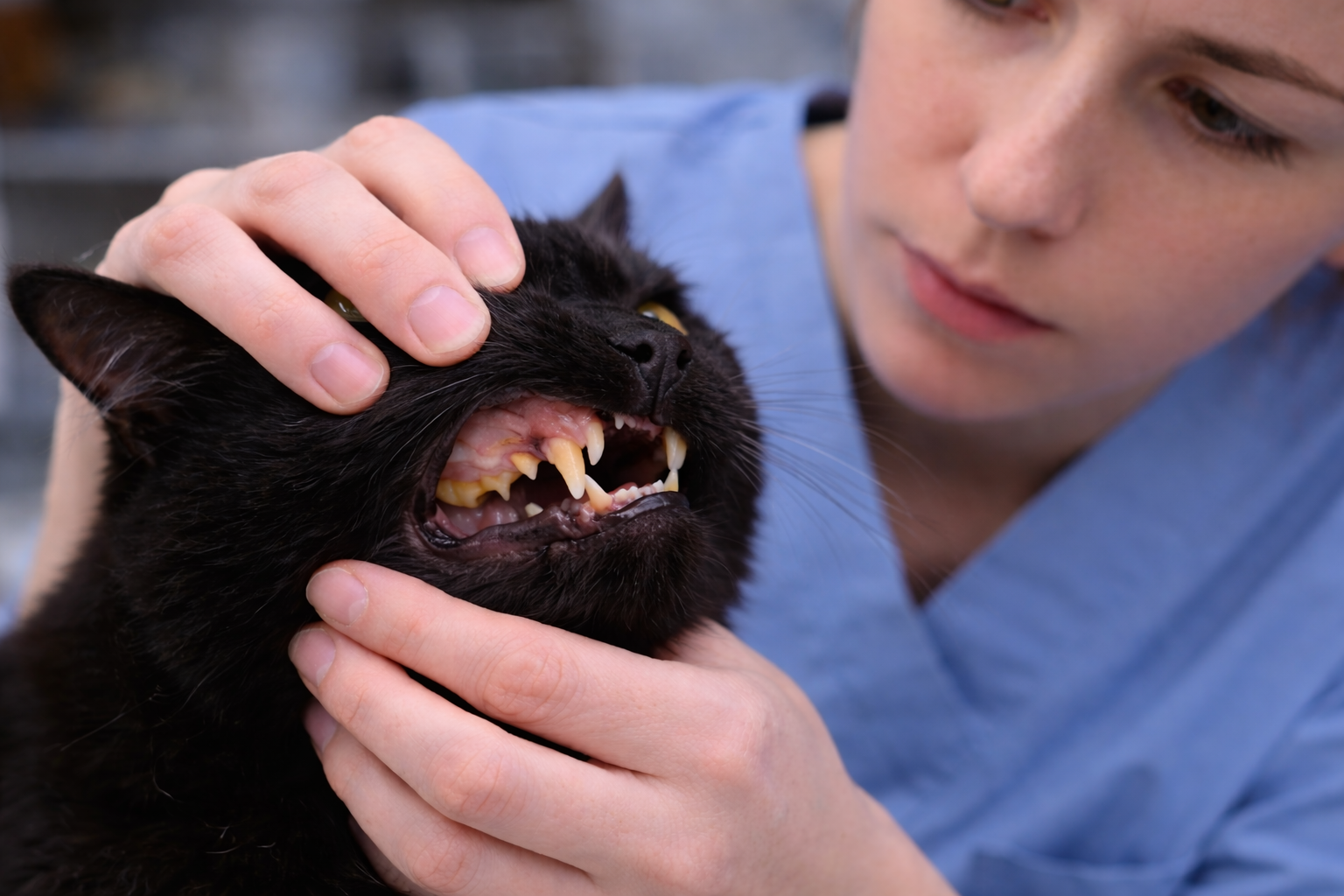
Luna's annual checkup was supposed to be routine. Instead, the vet gently opened her mouth and pointed to her teeth. "See this buildup along the gumline? And how red and inflamed her gums are? This is Stage 2 periodontal disease."
My stomach dropped. "But... she's only two years old."
The vet nodded. "Does Luna chew on things around the house? Plastic bags, cords, cardboard?"
"All the time. I thought she was just being difficult."
"That's actually the first sign no one notices. When cats don't have a natural outlet to clean their teeth, they'll instinctively chew whatever gives them resistance. It's their body's way of trying to scrape away plaque and massage inflamed gums."
The silence that came after only left me thinking…
She wasn't trying to annoy me. She was in pain.
Then came the estimate.
Professional dental cleaning: $847
Extractions for three damaged teeth: $390
Pre-anesthetic bloodwork: $180
Pain medication: $70
Total: $1,487.
I sat there, stunned, staring at the paper in my hands.
How did I not know? How long has she been suffering? Why didn't I see this coming?
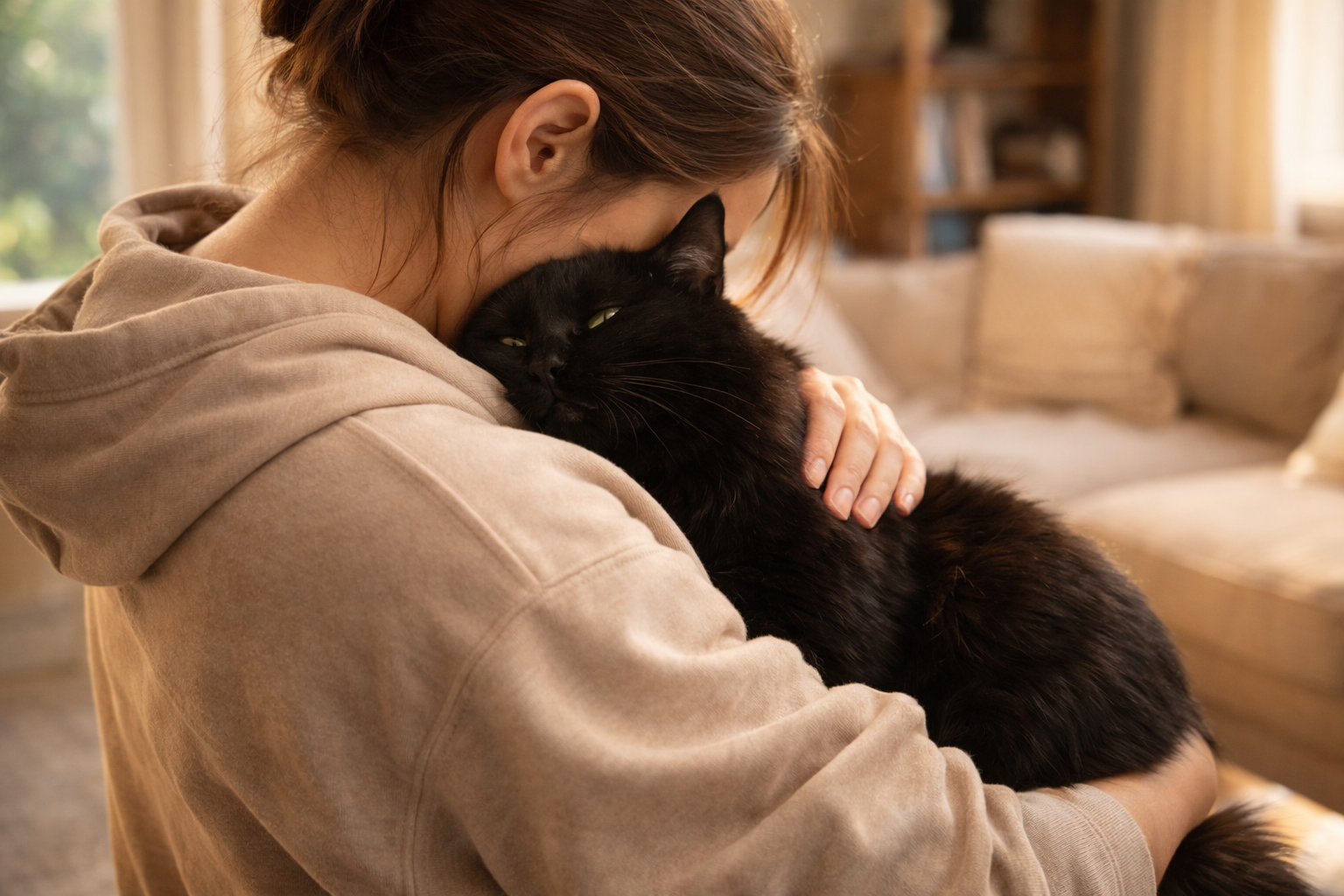
I Felt Like I Failed My Cat
The vet continued: "The good news is we caught it before it got worse. If left untreated, the bacteria from dental disease can enter the bloodstream and affect her kidneys and heart."
I kept replaying everything in my head.
The nights she pulled me out of sleep so I could hide plastic from her…
The times I yelled at her “NO” to stop with the lousy chewing…
All the signs I’ve ignored because I thought she was being annoying…
And there she was, crying out for help in the only way she knew.
To chew things trying to relieve the excruciating pain and itch happening right inside her mouth.
And I completely missed it.
The Hidden Sign of Dental Disease — Cat Chewing
After that vet visit, I became obsessed with understanding why this happens.
Here's what I learned:
In the wild, cats chew on bark, bones, and tough grass stems. It's how they naturally clean their teeth, massage their gums, and satisfy an instinctual need that's hardwired into their DNA.
But our indoor cats? They don't have access to any of that.
So they improvise.
They chew whatever gives them the resistance and texture their teeth are craving—plastic bags, electrical cords, cardboard, fabric.
It's not a behavioral problem. It's survival instinct in the wrong environment.
And when they don't get what they need? The plaque builds silently. The gums become inflamed. And by age two, 80% of indoor cats develop dental disease—just like Luna.
The vet told me something I'll never forget:
"Imagine not brushing your teeth for two years. That's what's happening in your cat's mouth right now."
The Discovery That Changed Everything
That's when I found research about silvervine—a plant from the mountains of Japan that triggers an instinctual response in 95% of cats.
Unlike catnip (which 30-40% of cats ignore), silvervine works on almost every cat. Especially the picky ones who ignore everything.
But here's what fascinated me: it wasn't just about the plant itself. It was about what cats do when they encounter it.
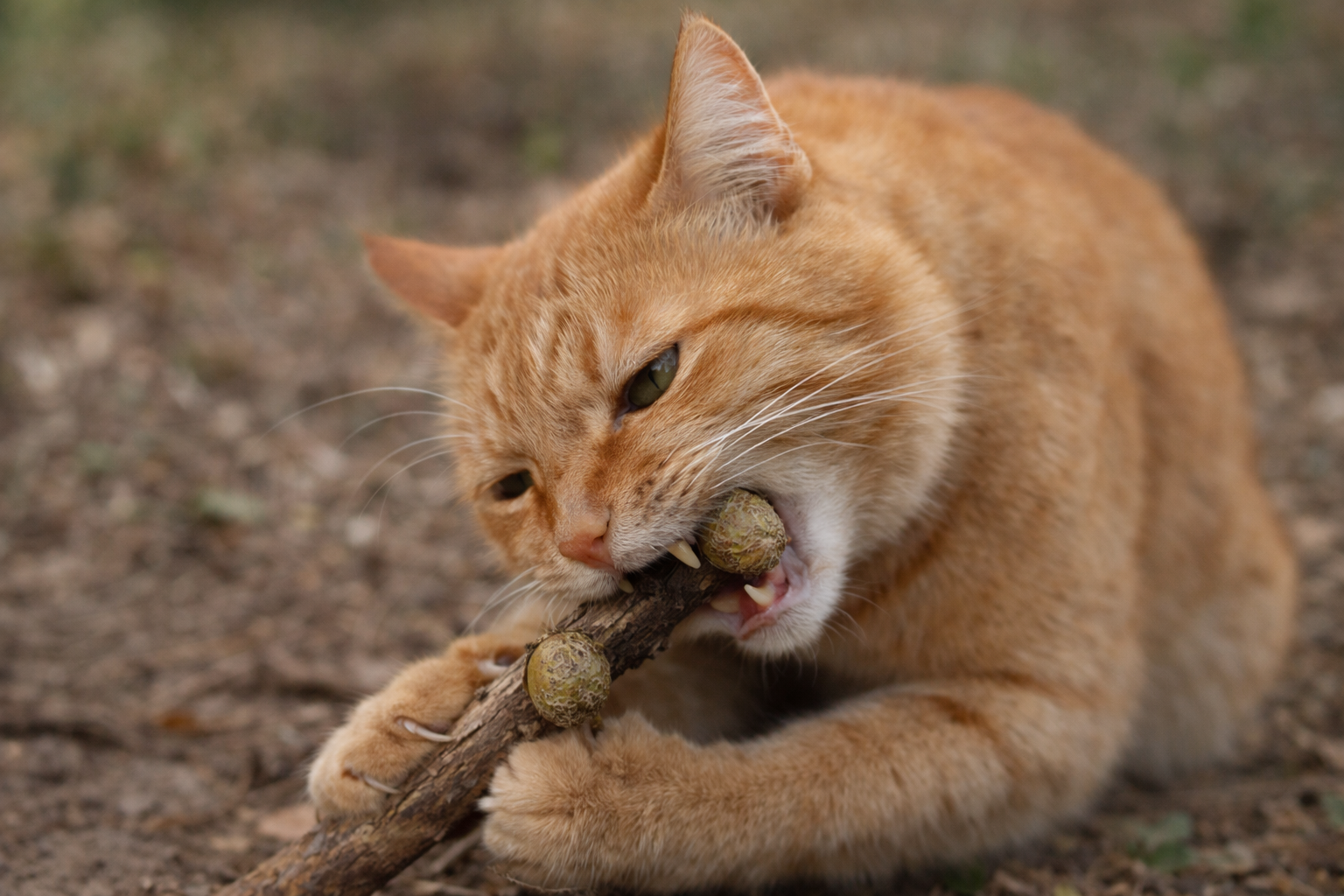
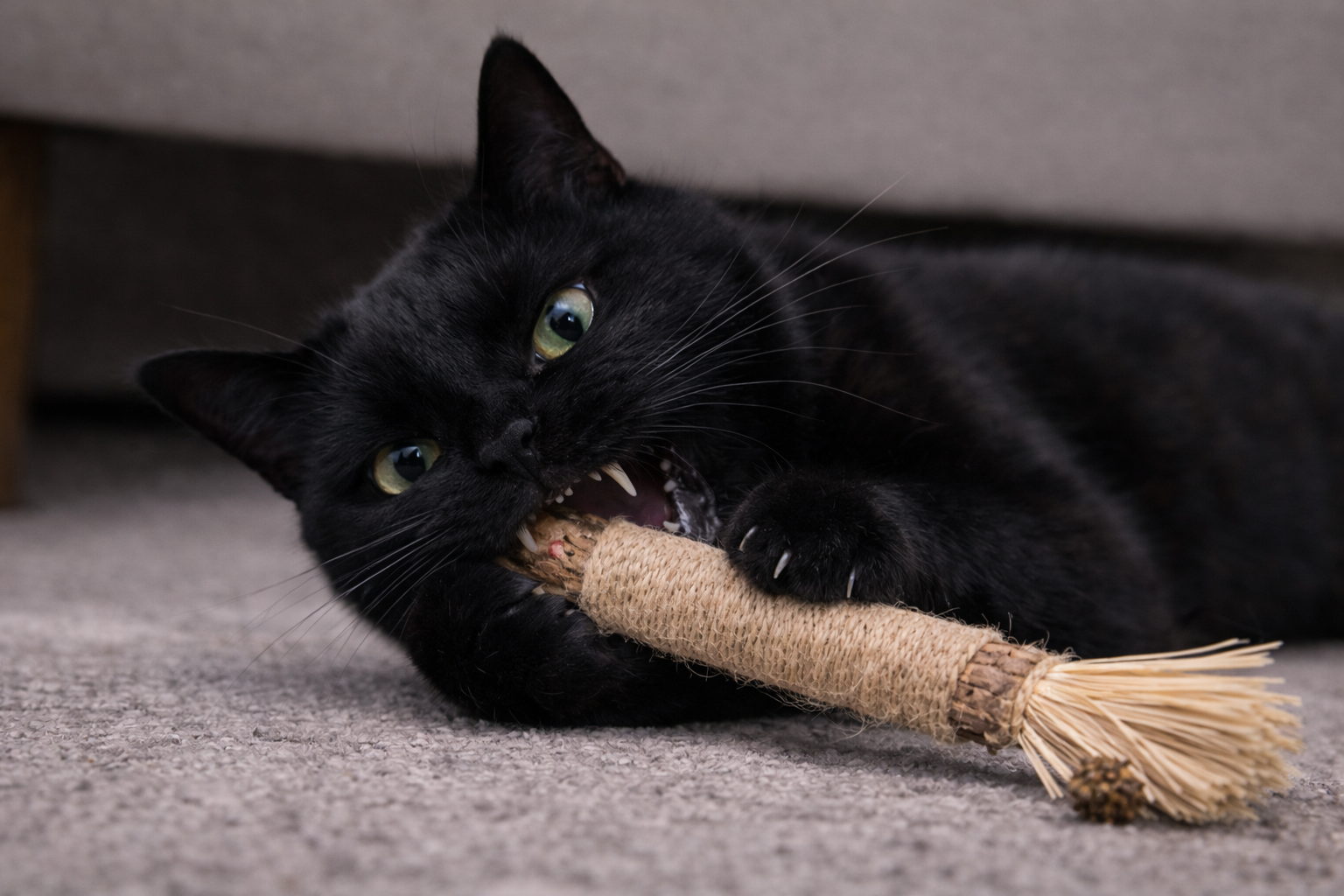
They grab it. They rub on it. And most importantly—they chew on it.
The natural wood provides the resistance their teeth crave. The fibers scrape away plaque as they chew. And the active compounds trigger a joyful, then calming response.
It was everything I'd been searching for.
And that's when I discovered Purriq.
Why Purriq Is Different
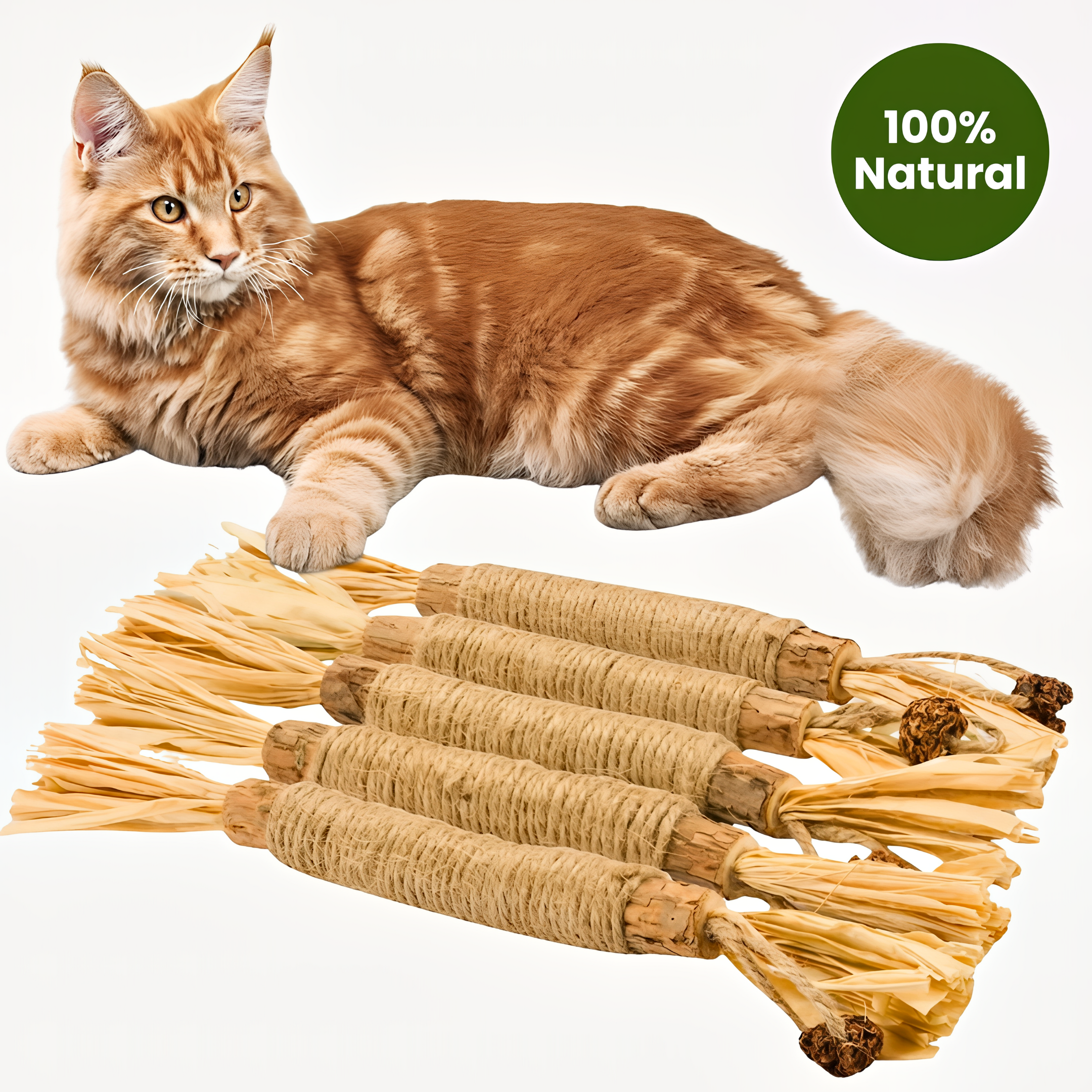
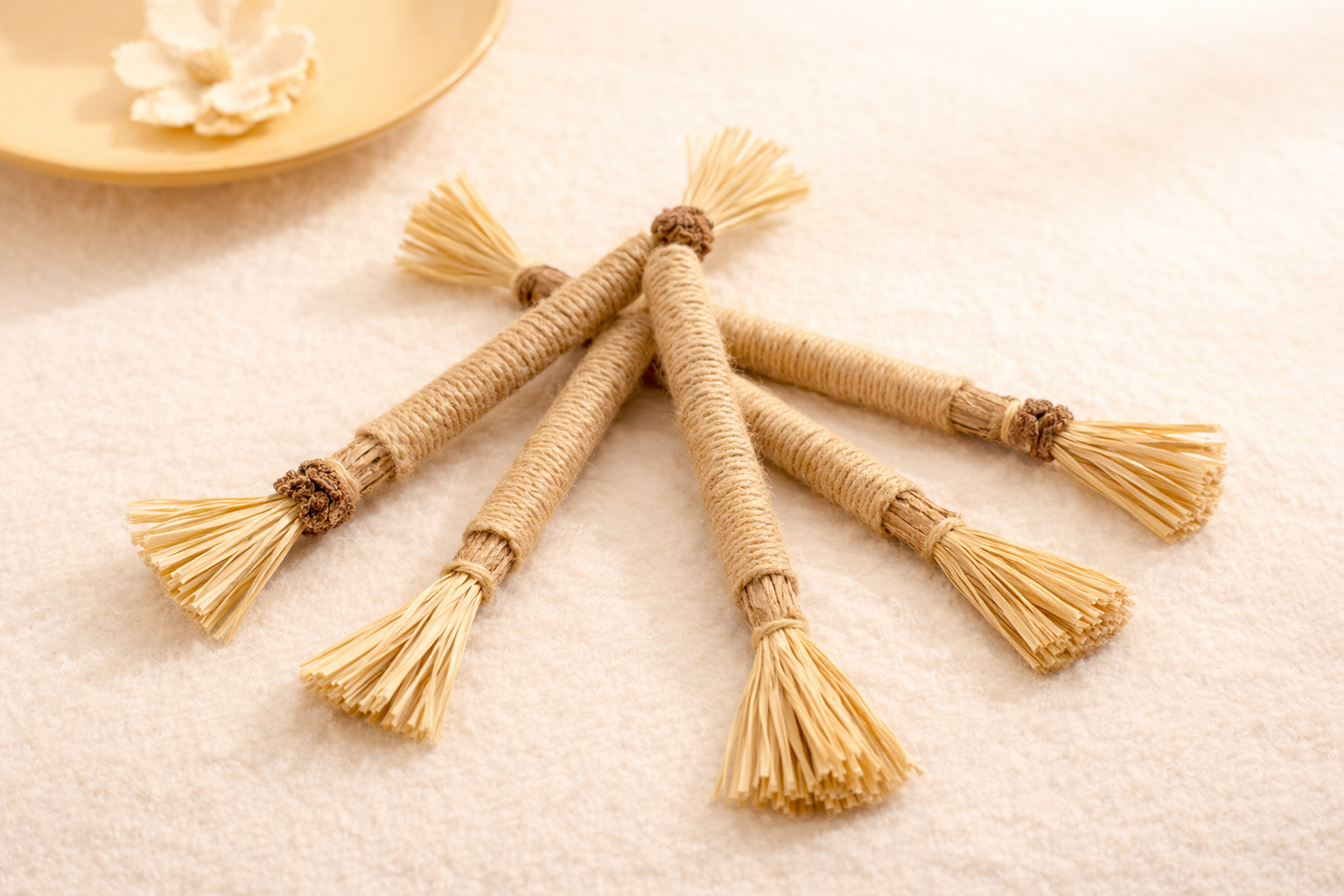
They were the first to create silvervine dental sticks with the gall fruit attached—the most potent part of the plant that triggers the strongest chewing response in cats.
Here's why it works:
Highest grade silvervine with gall fruit attached — This triggers the chewing instinct in 95% of cats (even cats who ignore catnip)
Triple texture that cleans teeth naturally — The wood fibers, sisal rope, and raffia grass scrape away plaque as your cat chews, cleaning those hard spots to reach no other toy or toothbrush can
Redirects destructive chewing — Instead of cords, plastic, and furniture, your cat chews something safe that actually helps their teeth
It's dental care disguised as something your cat actually wants to do.
What I Wish Someone Had Told Me Sooner
If I could go back and talk to myself before Luna's diagnosis, here's what I'd say:
"Please don’t ignore these signs. Your cat's chewing isn't random. It's not destructive. It's her body's way of begging you for what she needs. Give her something natural to chew—before the damage becomes irreversible."
Since creating Purriq, I've heard from thousands of cat parents who finally understood what their cats were trying to tell them:
"Her breath used to be so bad. I've noticed a real difference after a couple weeks."
"She used to chew cords and plastic... Now she channels that energy into her stick instead."
"I honestly thought this was just another Facebook gimmick. A friend gave me one from her pack and I was shocked that my cat actually loved it."
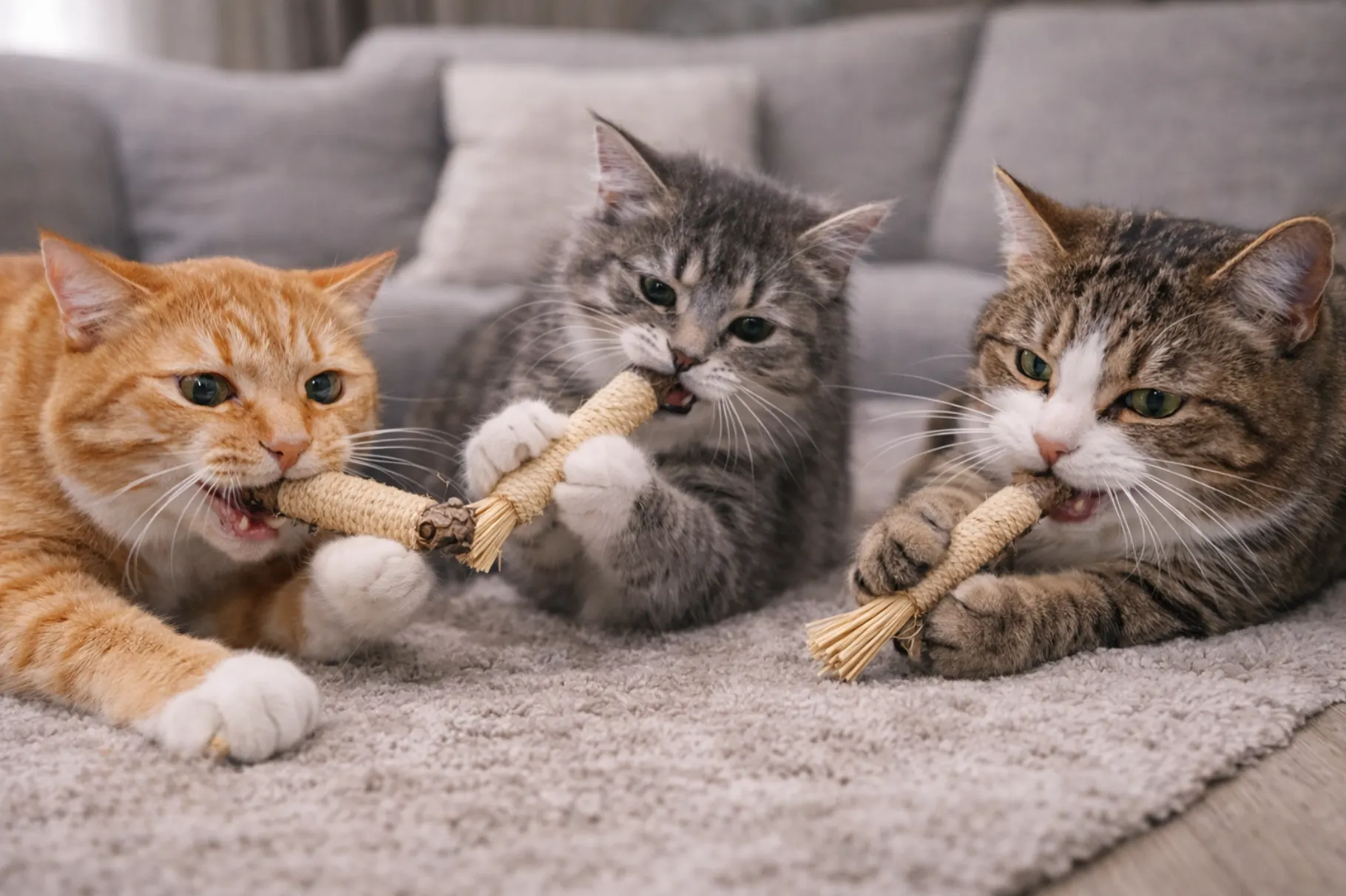
"All three of my cats love them—rare!"
And once I finally gave her what she needed? Everything changed. I saw her feeling like a kitten again, and that just told me how much she has been suffering all along.
And now I see why thousands of cat parents are trusting Purriq everyday.
That’s why I chose to be responsible too.
Don't wait for a $1,400 vet bill. Listen to the warning signs while you can, and give your cat what it needs before it’s too late.
Right now, they’re offering 70% off for new customers plus a 60-day money-back guarantee. So if your cat doesn't love them, you don't pay. No questions asked. But you have to be quick, their silvervine is the highest grade and they run out of stock pretty often.
Your cat—and your peace of mind—will thank you.